Pot, 2022
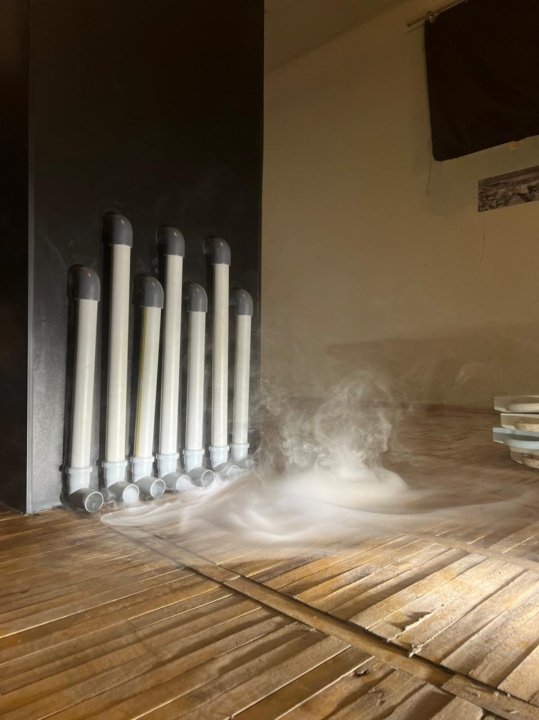
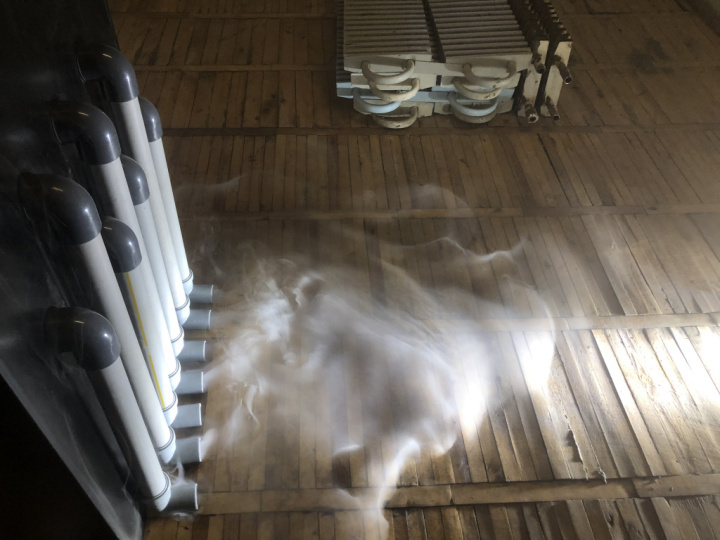
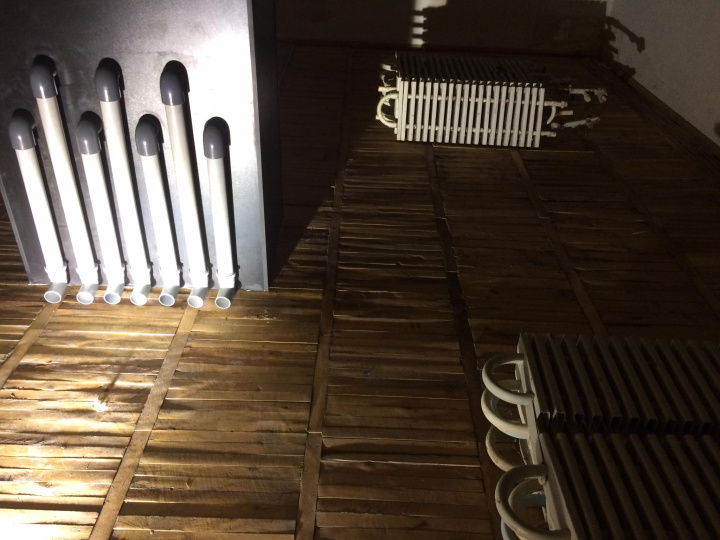
The central object in Mary Mikaelyan’s installation is the “boiling” industrial water heating pot. The functionality of the pipes coming out of the pot is changed in the installation: instead of transmitting air inside the system they emit smoke. It seems as if it is working, leaving out smoke from time to time similar to the smoke found in club areas.
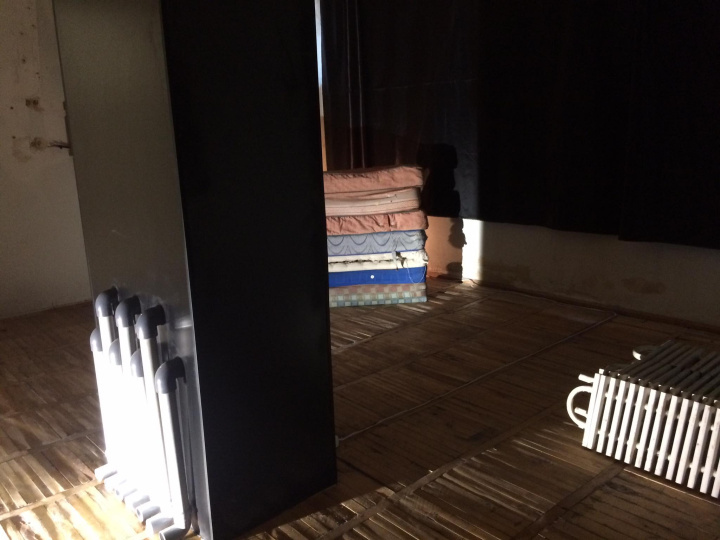
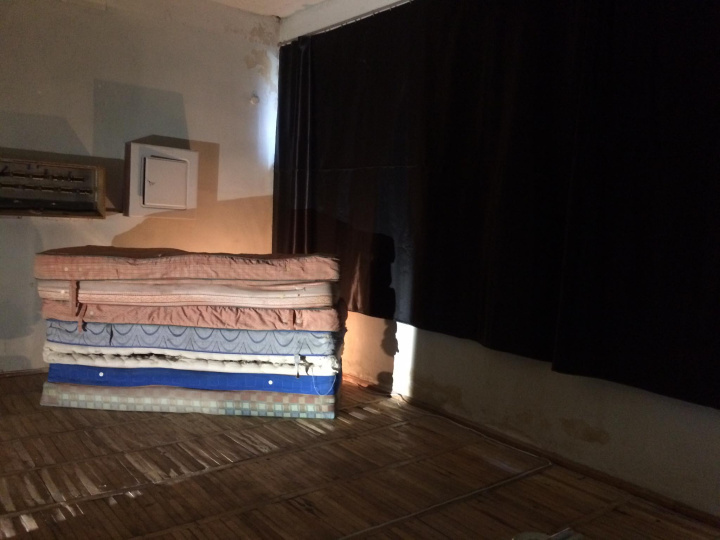
There are mattresses in the room intended for the people, working on the transformation of the area of the Orgov radio-optical telescope into a techno music area, to rest. Next to them non-functioning heaters taken from the same complex are positioned. They are a reference to the work of the American artist Michael Asher in 1992, where he exhibited the radiators of the exhibition hall by relocating them.
The central heating system built in the 80s had several years life in Armenia, when after the collapse of the Soviet Union, in the same 90s, it stopped working, causing a great disaster. Cutting down the non-functioning heaters left in the houses and selling them as metal in the market for recycling, became a way for people to find money and survive. The transition from industrial society to post-industrial relations creates instability and precarity. The central heating system was one of the achievements of industrial society, and it was also a consequence of centralized and hierarchical power. Post-industrial decentralized power is mobile, moving freely from place to place in search of new areas of efficiency and consumption.
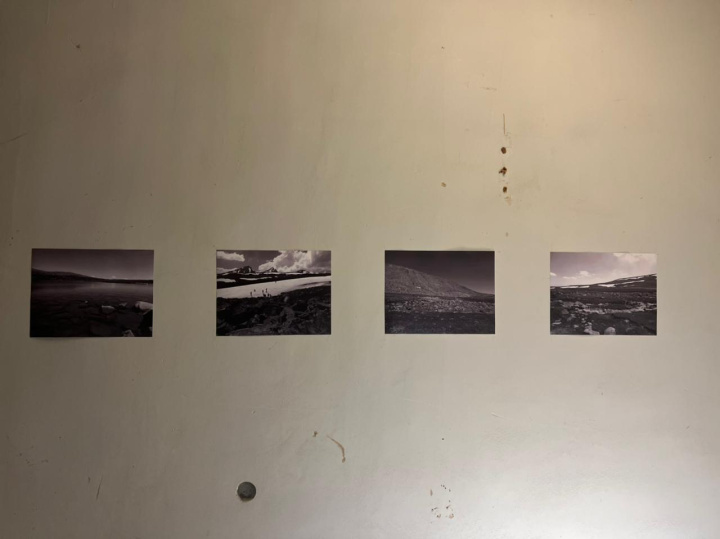
Several photos of Aragats mountain, on which the complex is built, are posted on the wall. The photos were taken by Mary Mikayelyan's sister, Knarik Mikayelyan, during her travels in the area. These photographs, converted to black and white by the artist for the installation, depict landscapes from the mountain, where the ecological crisis is shrinking the glaciers and snowpacks that are an important source of water for the surrounding settlements.
Tegher village, literally translated Places, is located near the radio observatory. One of the consequences of deindustrialization is deterritorialization. International techno music has now settled in the ruins left over from the Cold War, reterritorializing it, appropriating it according to the logic of new consumer relations.
The impossibility of a return to a certain place and certain time is what interests the artist, and what we do within that impossibility when the world we know disappears.